What's inside
Approvals, role mining, SoD — one unified flow.
Everything that decides who-gets-what lives here. From the employee requesting access to the manager approving it, the security gate catching an SoD conflict, and the role mining engine proposing the pattern they all share — same data model, same audit chain.
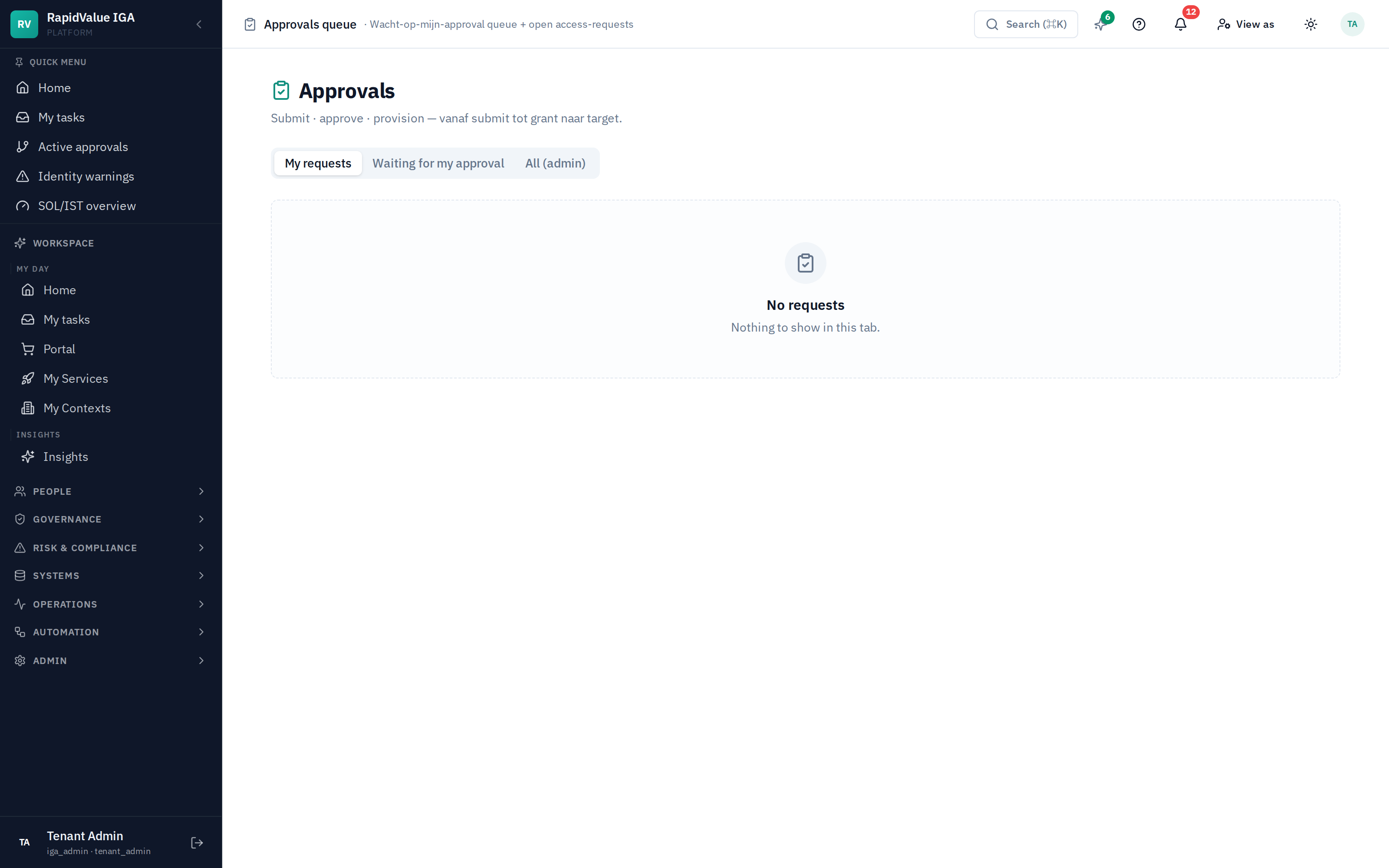
My requests, requests for me, all-tenant — one queue
Approvers see only what they're responsible for. Each request shows the full chain — who already approved, who's next, why the SoD check passed or flagged. Decision metadata is captured for the audit chain.
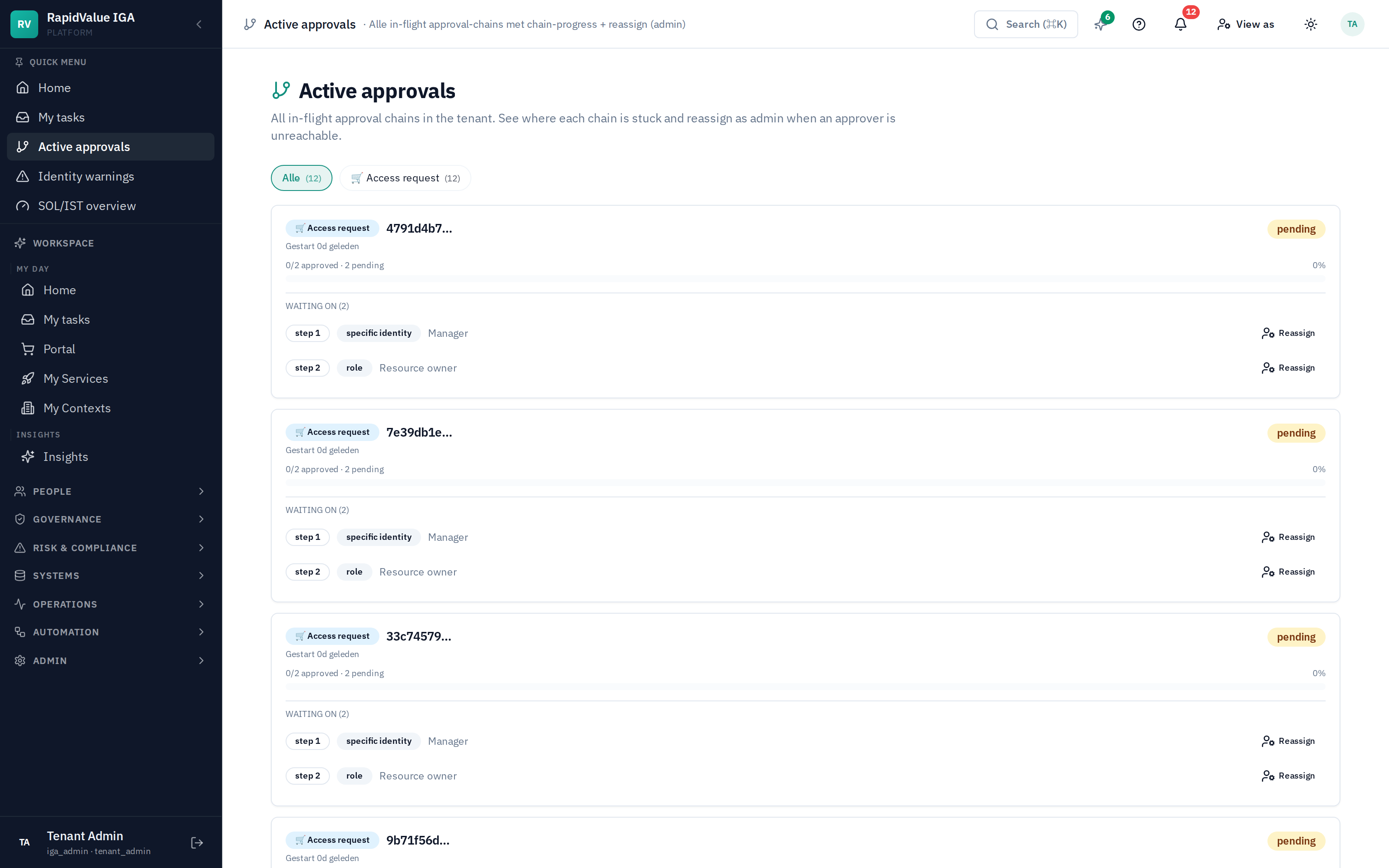
Visual approval-chain tracking
Operators see every in-flight request with its current step, quorum status, time-to-deadline, and routing rationale. Filter by approver role, target system, or rule that matched. Re-route stuck requests without breaking the audit trail.
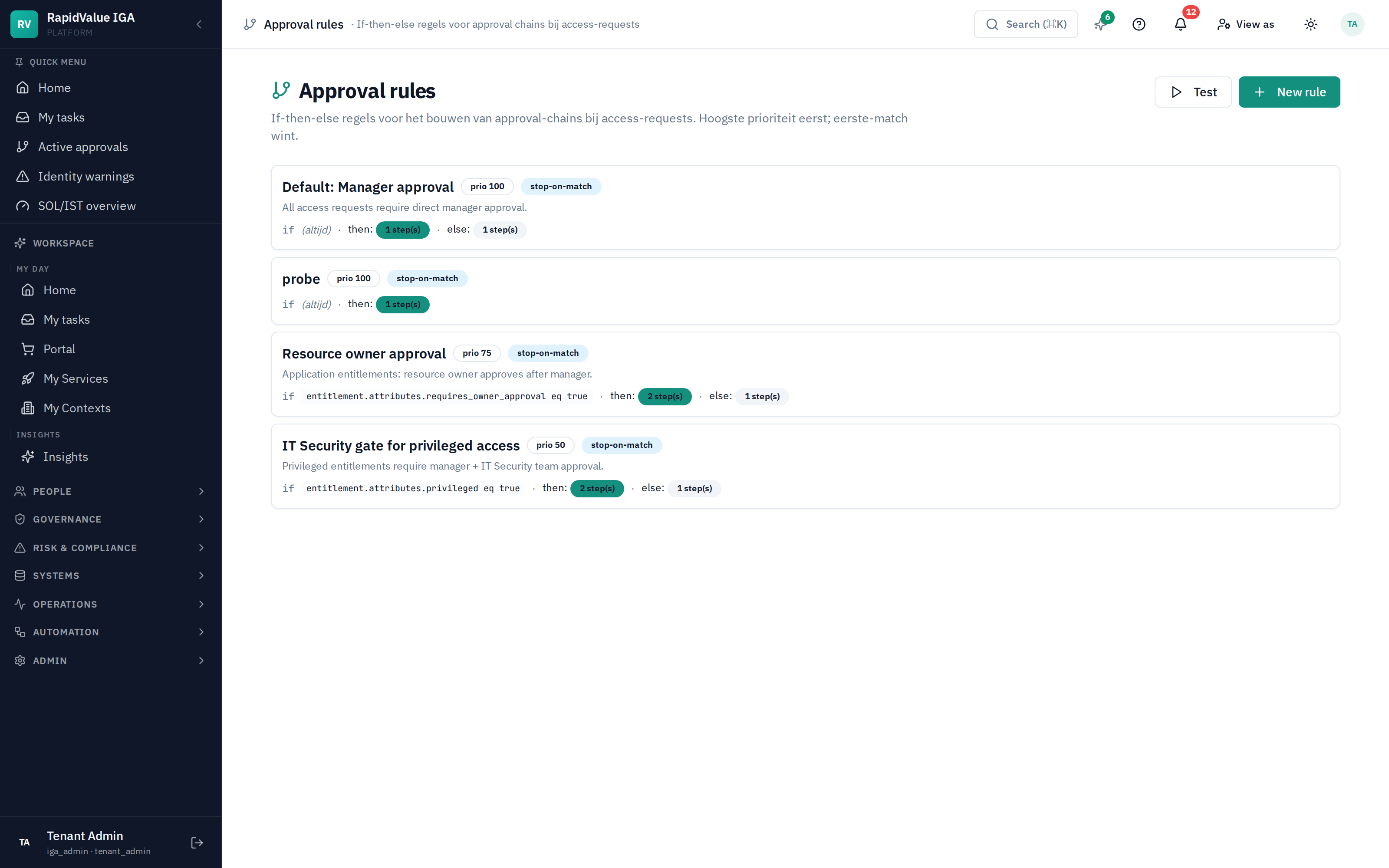
Multi-step chains with quorum semantics
Manager → Security team (any-1-of) → Resource owner. Quorum types: all, any, n-of-m. Conditions evaluated server-side with the shared filter DSL. Stop-on-first-match priority ordering so rules don't cascade unpredictably.
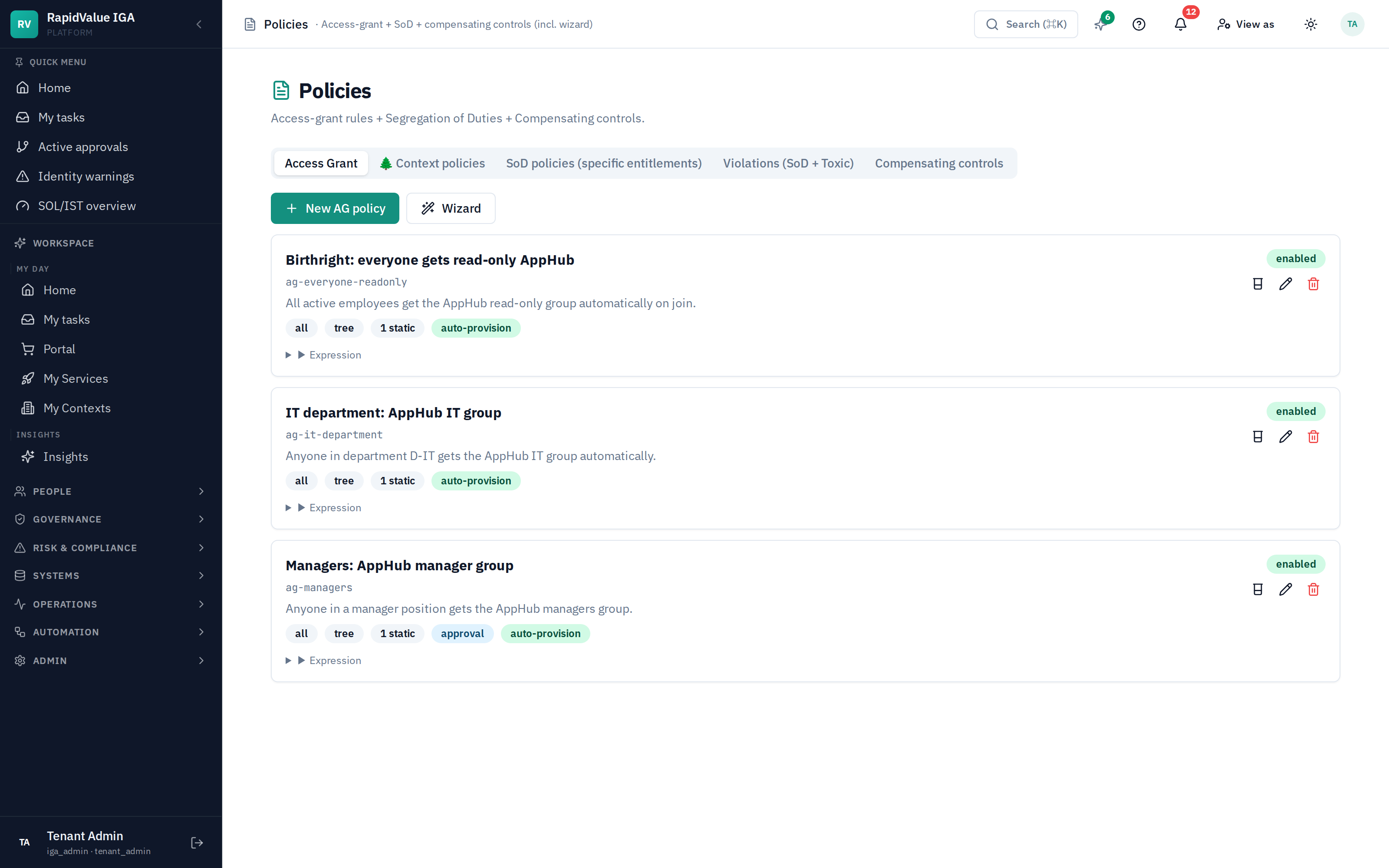
Auto-grant policies + birthright access
Access-grant policies that say "everyone in Finance gets app X, role Y". They evaluate continuously — when someone joins Finance, their access updates automatically. When they leave Finance, the policy revokes it. No manual maintenance.
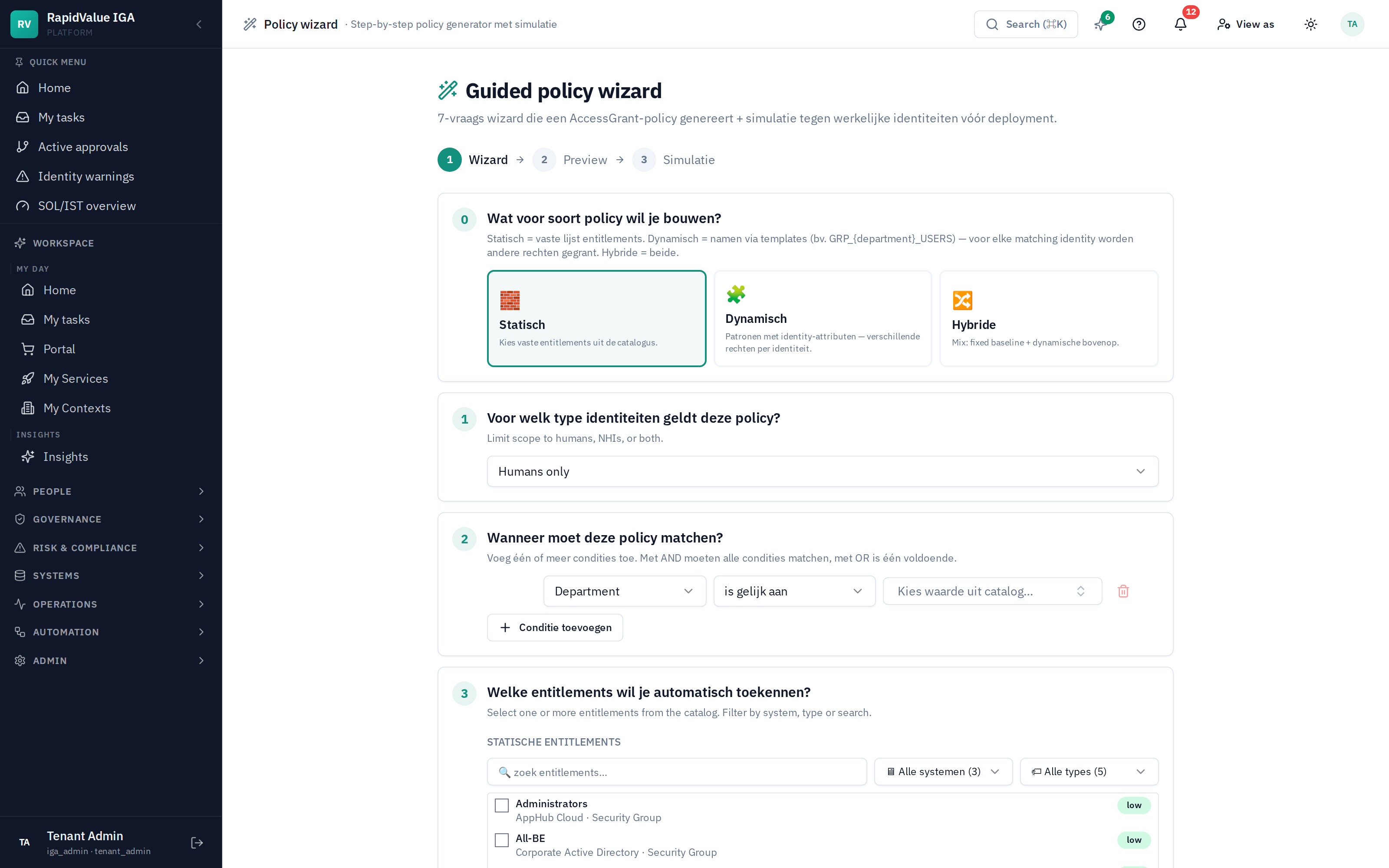
Guided policy authoring — no DSL knowledge required
Visual builder walks admins through condition selection, target resources, and approval routing. Live preview shows who'd be affected before you save. The shared filter DSL underneath is audit-friendly and version-controlled.
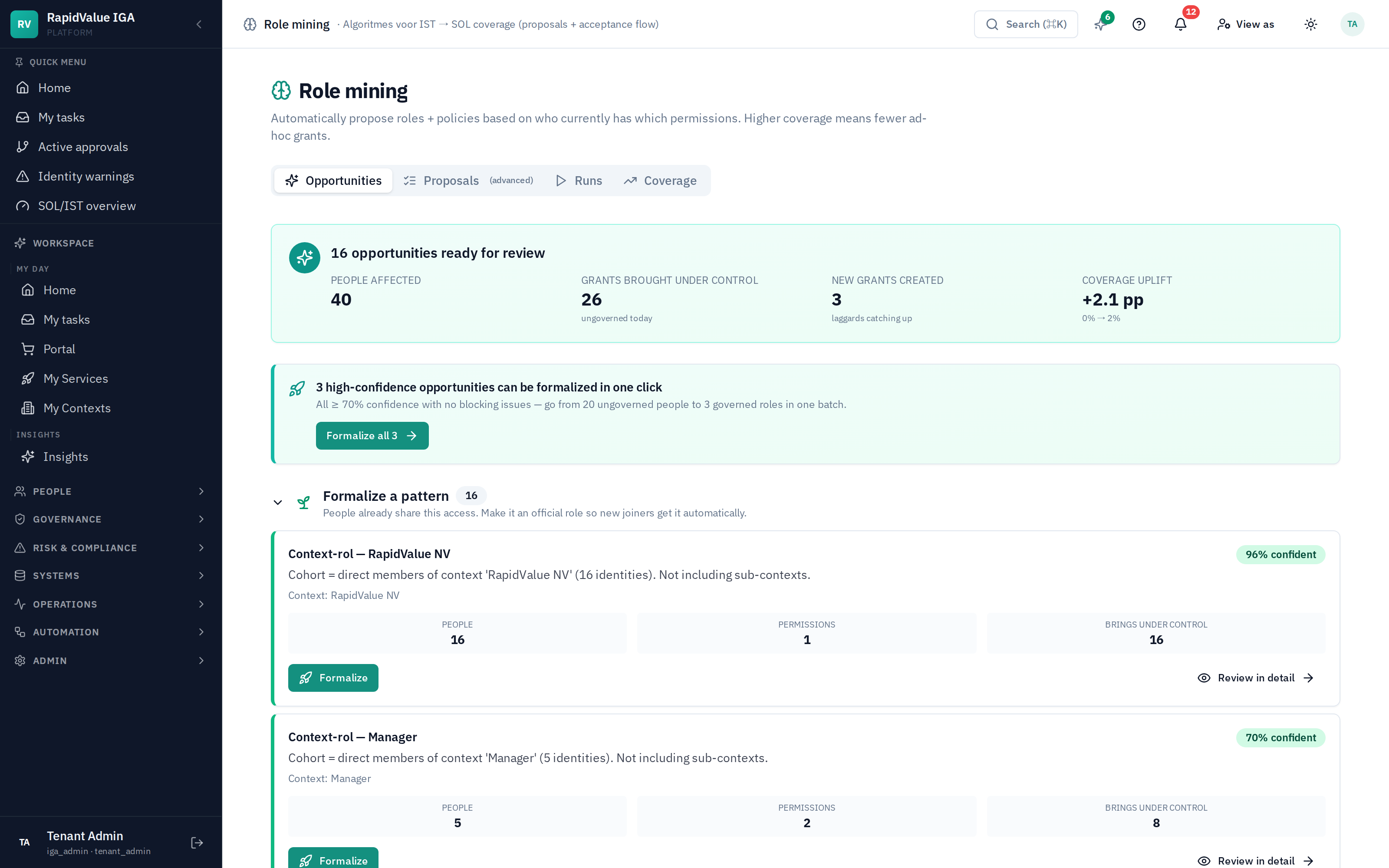
Opportunities, not algorithm metrics
Mining surfaces proposals in plain language: "40 people in 'RapidValue NV' share this access. Formalize as a role — reduces 16 ungoverned grants." Confidence + impact + cohort size displayed up front. One-click formalize.
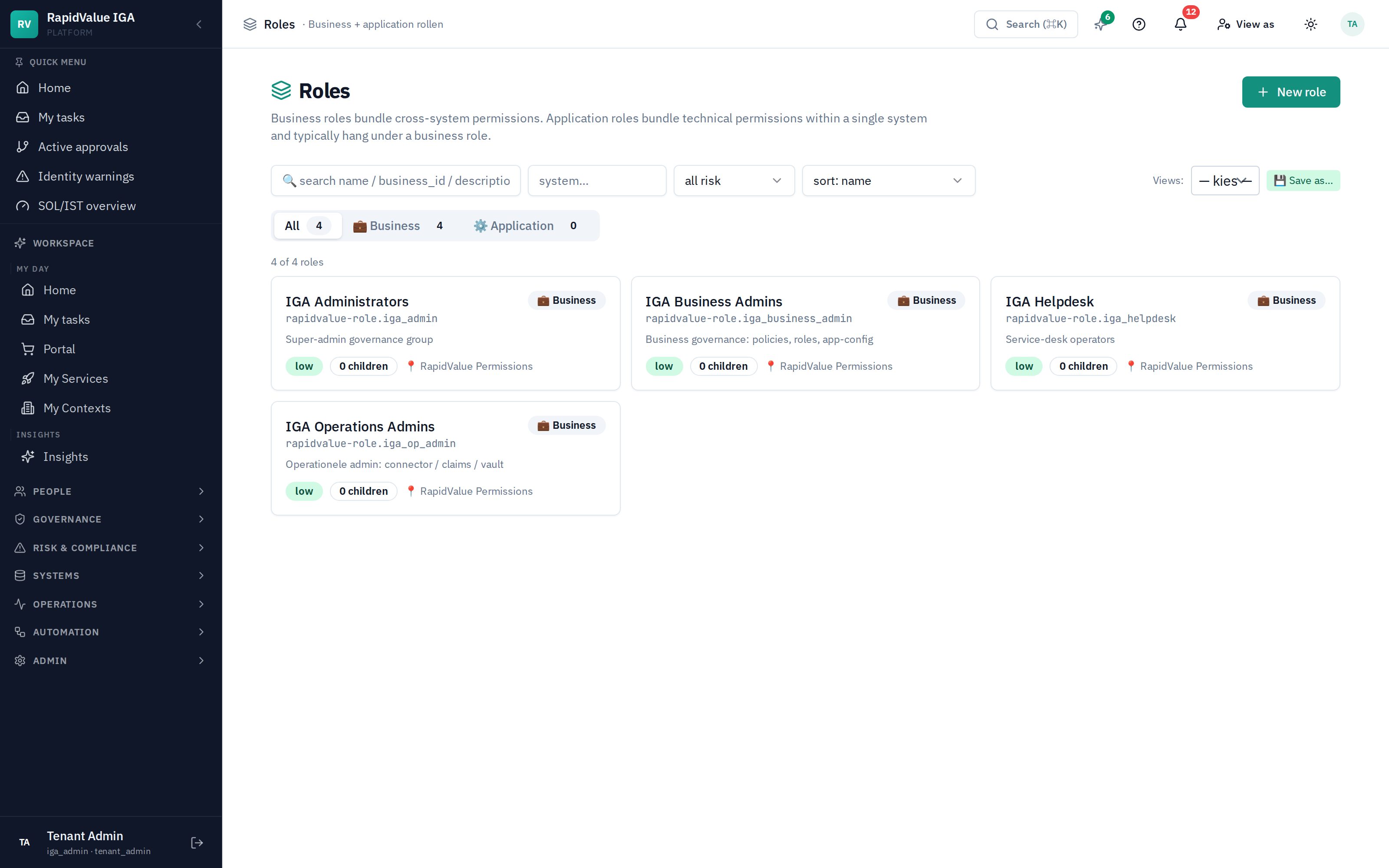
Business roles + application roles + birthright
One taxonomy for all role types. Business roles bundle entitlements for a function ("Finance analyst"). Application roles wrap target-side groups. Each role has its own re-cert cadence, membership model, and ownership.
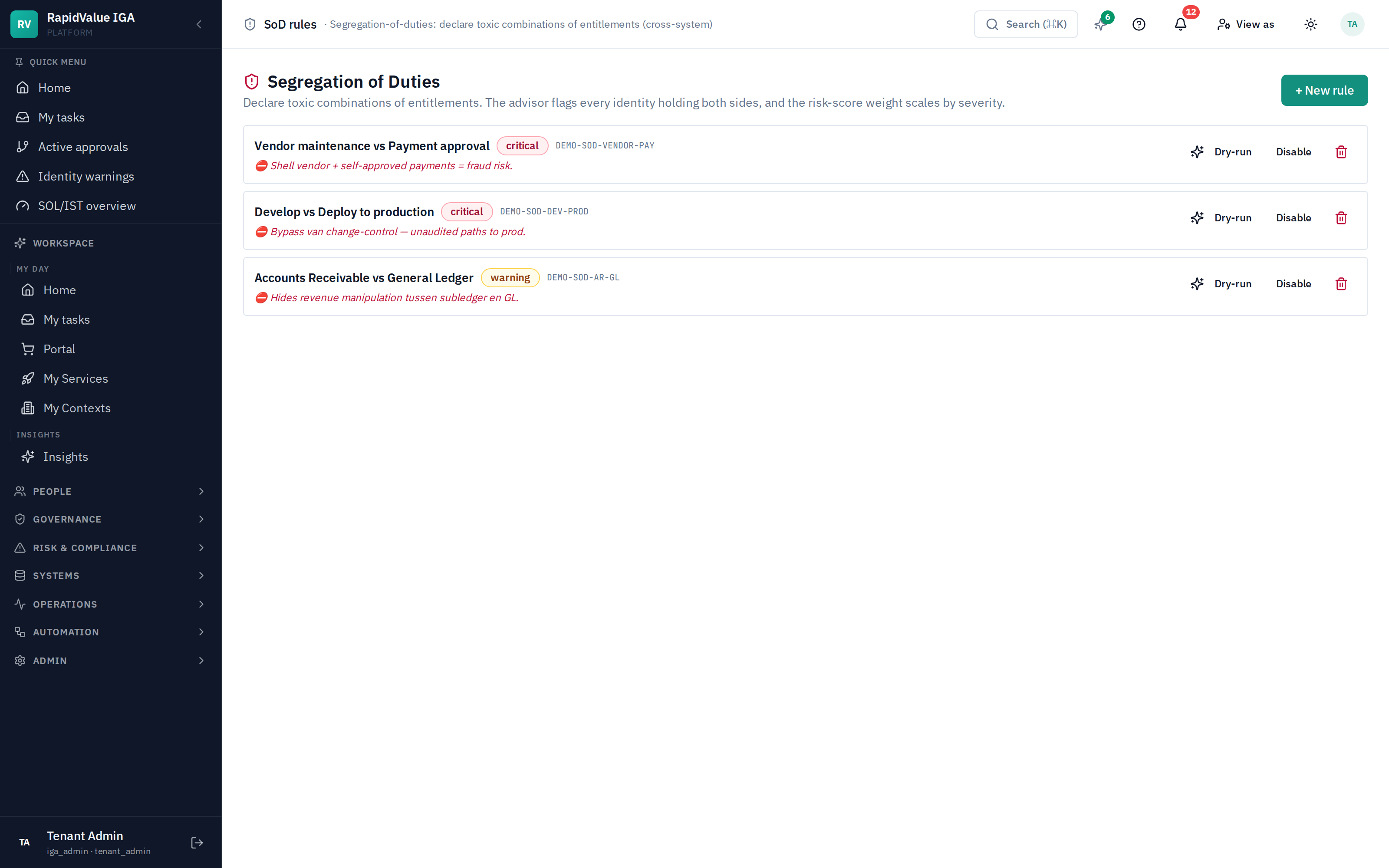
Separation of duties — preflight + continuous
SoD checks run before grants are submitted (preflight) and on a schedule across existing access (continuous). Toxic combinations are blocked or routed to compensating control. The conflict surface shows you who has what conflicting pairs and why.
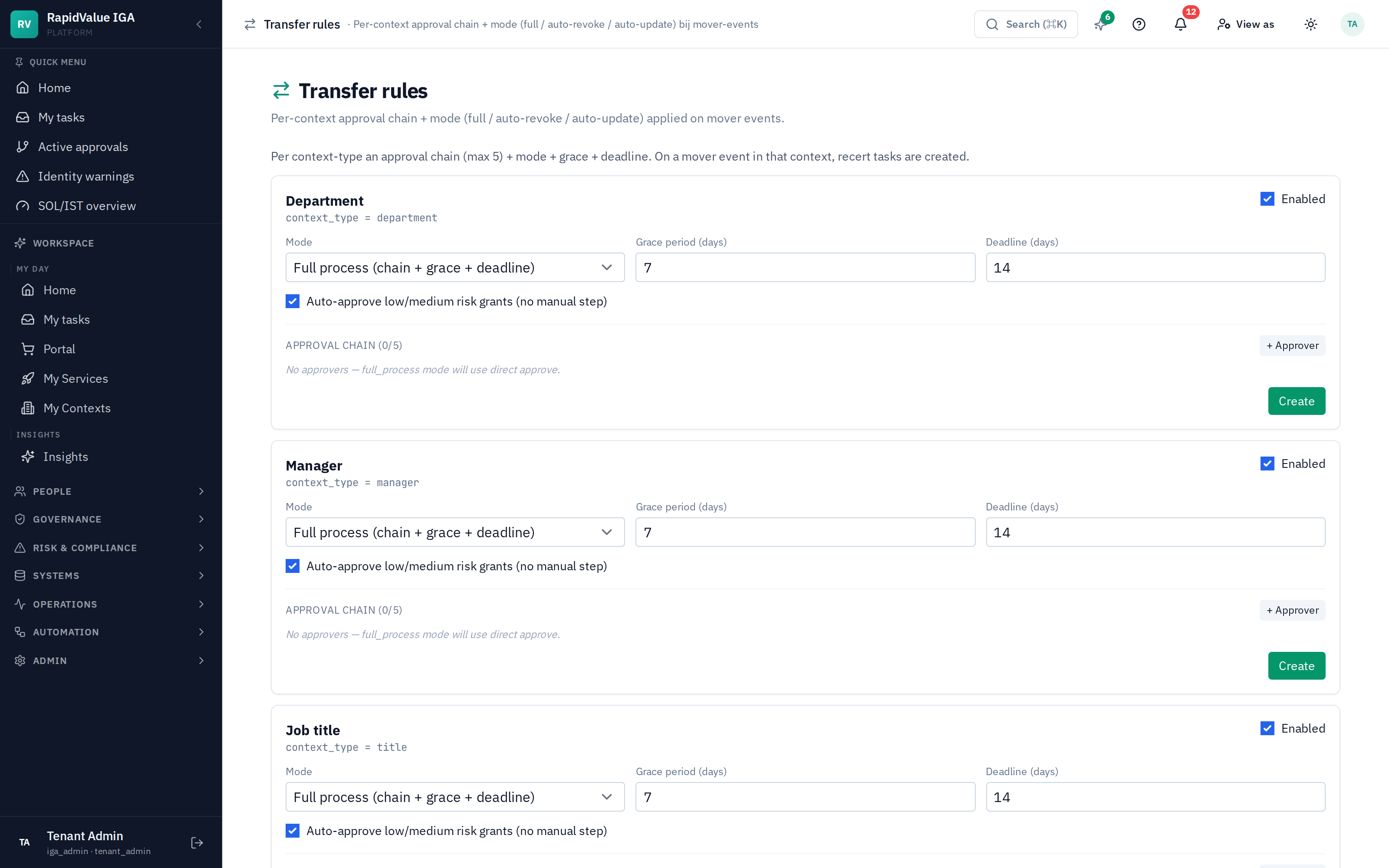
Department change → access recalculated
When someone changes department or job title, transfer rules govern what stays, what gets revoked, what gets granted, and what fires a smart-cert review. The new manager confirms; the old access doesn't silently linger.
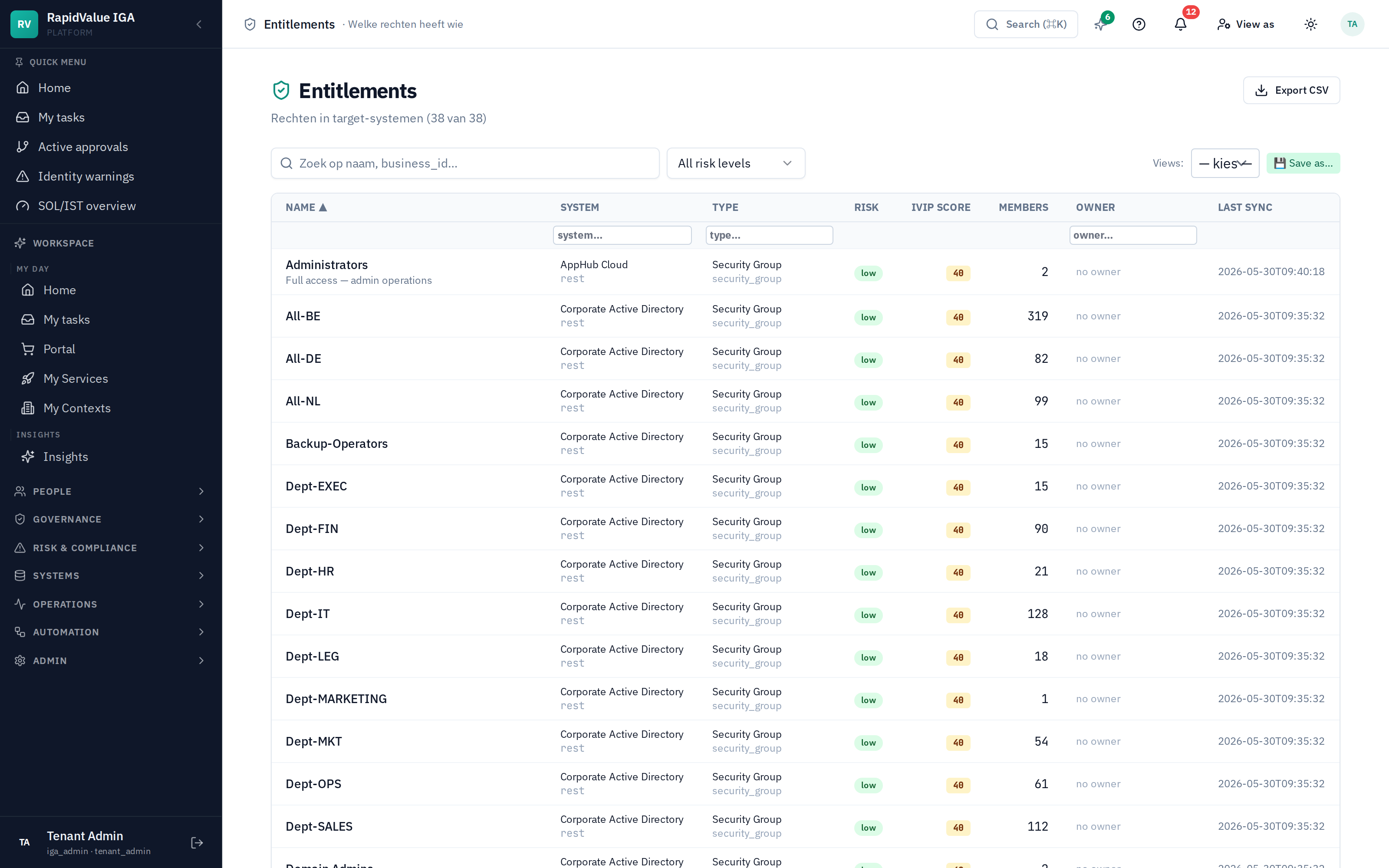
Every permission, every system, owner-attributed
Entitlements imported from target systems become first-class objects with owner, description, risk rating, and review cadence. Group them into business-meaningful roles or expose them in the self-service catalog for direct requests.